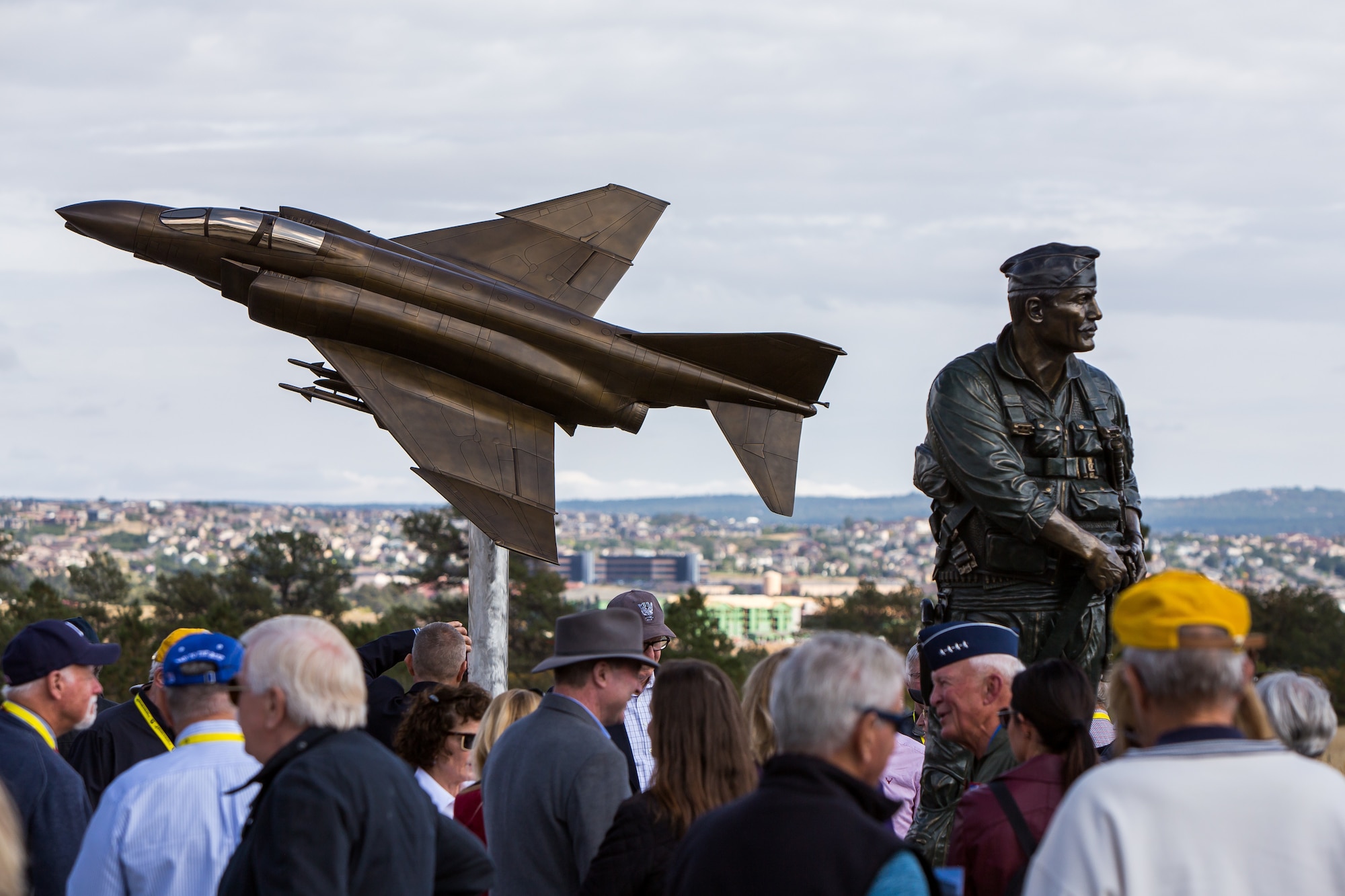
The Air Warrior Combat Memorial at the U.S. Air Force Academy in Colorado Springs stands as a testament to the indomitable spirit of General Robin Olds, a decorated fighter pilot whose legacy spans World War II and the Vietnam War. Unveiled on October 1, 2021, this memorial is more than just a tribute to one man; it symbolizes the valor, leadership, and sacrifice of all air warriors who have served with distinction. The bronze statue immortalizes Olds, a triple ace with 17 aerial victories, and it continues to inspire generations of cadets at the Air Force Academy.
Memorial Unveiling at U.S. Air Force Academy
On October 1, 2021, the United States Air Force Academy honored one of its most legendary figures with the unveiling of the Air Warrior Combat Memorial. Located on the academy’s hallowed grounds, this memorial serves as a beacon of inspiration for future generations of Air Force officers. The unveiling ceremony was attended by military officials, fellow veterans, and members of the Academy’s Class of ’71, which had a special connection to Olds, having been led by him as their Commandant of Cadets.
The memorial is set against the backdrop of the majestic Rocky Mountains, a fitting setting for a figure who spent much of his career soaring through the skies in defense of freedom. The bronze statue, designed by renowned sculptor James Nance, depicts Robin Olds in his iconic flight suit, standing tall with pride and leadership. Behind him, the lifelike image of an F-4 Phantom II—a powerful reminder of Olds’ Vietnam War service—hovers in mid-air. The unveiling was not just a ceremony but a powerful reminder of Olds’ contributions to aerial warfare and his lasting impact on the Air Force legacy.
Honoring Robin Olds, Triple Ace Pilot
Brigadier General Robin Olds was a pilot whose skill and courage made him a legend in both the Pacific theater during World War II and the skies over Vietnam. As a triple ace, Olds was credited with 17 aerial victories, making him one of the most accomplished fighter pilots in U.S. history. His career, which spanned multiple decades, was marked by daring combat missions and strategic brilliance, culminating in his role as a mentor and leader at the U.S. Air Force Academy.
Olds’ leadership extended beyond the cockpit. During the Vietnam War, he played a pivotal role in Operation Bolo, a mission designed to lure MiG fighters into a trap. His tactics proved successful, cementing his reputation as a master of aerial combat. His ability to inspire those around him was evident not just in battle but also in his service as the Commandant of Cadets at the Air Force Academy. Through his influence, Olds shaped the next generation of air warriors, imparting not only technical expertise but also a deep sense of duty and honor.
Air Warrior Combat Memorial Design and Funding
The Air Warrior Combat Memorial’s design is a striking embodiment of Robin Olds’ legacy. The centerpiece of the memorial is a bronze statue of Olds, crafted with incredible detail by sculptor James Nance. His posture, confident and commanding, captures the essence of Olds’ leadership and skill as a fighter pilot. The F-4 Phantom II behind him, crafted in bronze, recalls the aircraft Olds flew during his most famous campaigns in the Vietnam War. Together, they create a visual narrative of Olds’ military career and his immense contribution to air combat innovation.
The memorial was funded and supported by the Class of ’71 at the U.S. Air Force Academy, Olds’ alma mater. His bond with the class was deeply personal, having served as their Commandant of Cadets. The Class of ’71 saw this as an opportunity to give back to the man who had given so much to them, not just as a commander but as a mentor who instilled values of honor, courage, and leadership. The funding for this tribute reflects the lasting impact Olds had on the academy and the Air Force as a whole.
A Tribute to Air Power
The Air Warrior Combat Memorial is a tribute not only to Robin Olds but also to the broader concept of air power. In many ways, the memorial encapsulates the evolution of aerial combat and the growing importance of air forces in modern warfare. From Olds’ early days as a fighter pilot in World War II to his groundbreaking missions in the Vietnam War, his career mirrored the advancements in air combat technology and tactics.
The memorial serves as a reminder of the crucial role that air power plays in both peacetime and wartime. Through Olds’ efforts, the United States Air Force became a dominant force in the skies, one that could respond swiftly and decisively to threats. The monument honors not just the man but the very concept of air superiority, which has defined the U.S. military’s ability to project power and influence across the globe.
Legacy of Leadership and Combat Excellence
Robin Olds’ legacy is one that goes beyond his remarkable combat achievements. His leadership as a pilot, commander, and educator has left an indelible mark on the Air Force. Olds was known for his ability to lead by example, inspiring those under his command with his courage, integrity, and tactical brilliance. His role in shaping the Air Force Academy’s cadets as the Commandant of Cadets ensured that his legacy would continue through future generations of military leaders.
The Air Warrior Combat Memorial serves as a lasting testament to this leadership. It’s not just a tribute to Olds’ aerial victories but to the values he imparted on those who followed him. His legacy is carried forward by the cadets who learned under his guidance, many of whom have gone on to serve in high-ranking positions within the U.S. Air Force. Through this memorial, General Olds’ example of leadership and excellence in combat will continue to inspire for generations to come.
The Role of Air Force Academy Cadets
One of the most profound aspects of the Air Warrior Combat Memorial is its connection to the cadets of the U.S. Air Force Academy. General Robin Olds’ influence was deeply felt during his time as the Commandant of Cadets, and the memorial represents more than just his legacy; it’s a reminder of the critical role that the Academy plays in shaping the future of the Air Force. As the next generation of military leaders walks past the memorial, they are reminded of the values of duty, sacrifice, and excellence that Olds instilled in his students.
The memorial encourages cadets to reflect on the lessons of Olds’ career—not just his incredible achievements as a fighter pilot but also his commitment to service and leadership. It serves as a powerful visual representation of the academy’s mission to produce leaders who are ready to face the challenges of modern warfare. Every cadet who views the memorial is encouraged to emulate Olds’ example and strive for the same level of excellence in their own careers.
Frequently Asked Questions
1. Why was the Air Warrior Combat Memorial created?
The memorial was created to honor the legacy of Brigadier General Robin Olds, a triple ace fighter pilot who made significant contributions during both World War II and the Vietnam War. It also serves to celebrate the values of leadership and excellence in combat that Olds instilled in future Air Force leaders during his time at the U.S. Air Force Academy.
2. Who designed the Air Warrior Combat Memorial?
The memorial was designed by sculptor James Nance, who created the lifelike statue of Robin Olds. The design also includes a bronze representation of the F-4 Phantom II, the aircraft Olds famously flew during the Vietnam War.
3. What does the memorial represent?
The Air Warrior Combat Memorial represents not only General Robin Olds’ contributions to air combat but also the broader legacy of air power and leadership in the U.S. Air Force. It serves as an inspiration to future cadets and honors the values of courage, honor, and service.
4. Who funded the memorial?
The memorial was funded by the U.S. Air Force Academy Class of 1971, which had a close personal connection to General Olds. As their Commandant of Cadets, Olds had a profound influence on the class, and they sought to honor him through this tribute.
5. How does the memorial inspire current cadets?
The memorial serves as a daily reminder to Air Force Academy cadets of the standards of excellence set by General Olds. It encourages them to reflect on his legacy and strive for the same level of leadership and excellence in their own military careers.
