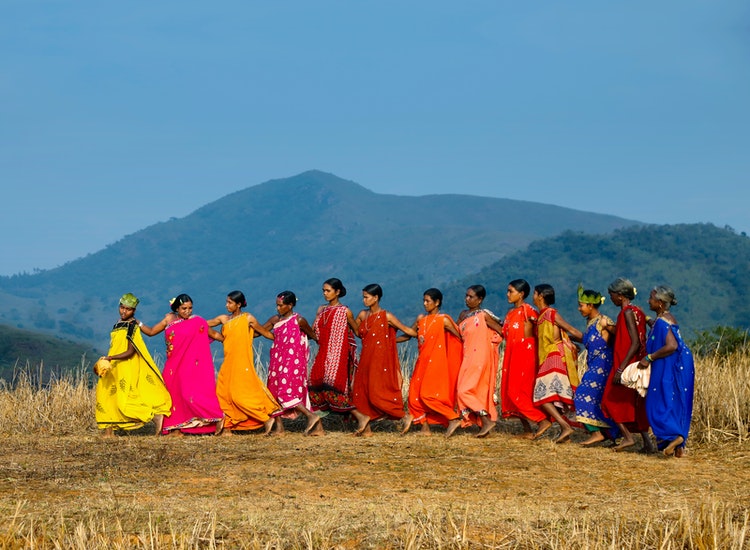
Indian tribal clothing has a lengthy and fascinating story. They’ve been traded throughout the globe for many centuries.
Textiles have a long history throughout the world. Indian tribesman-made textiles are considered to be one of the oldest in the world and go from the Indus Valley civilization. One of the earliest sections of the Veda which is the Rigveda contains references to weaving and textiles. There was a wide assortment of different kinds of textiles found in Indian epics, such as Mahabharata and Ramayana that demonstrates the significance they hold within Indian culture. The epic tales discuss the clothing used by the common folk and the aristocrats too. Exporting Indian tribal clothing was a common theme in Indian writings, as well. The Vijayanaga Empire in 1504 A.D. considered textiles to play a significant role in the daily routine of their life. Social, weather practices, as well as geography, define the style of Indian tribal textiles with their style and aesthetics.
Trade-in textiles were very common between India and other nations in the world of ancient. The Romans loved the silk woven by the Indians in the Christian time. Egyptians were awed by the variety of textiles made of cotton, from around the fifth century A.D. Small remnants of textiles were discovered inside Egyptian tombs. Indonesia is a regular purchaser of silk textiles imported from south India during the thirteenth century. Other buyers for Indian textiles included Muslims from Bengal as well as the British East India Company who trade cotton and silk textiles. It is evident that the same care for quality and detail that was evident throughout these periods in the styles, techniques, and patterns of weaver of textiles. India has traded with nations across the globe and helped create the rich heritage that they are today.
Indian tribal textiles are sold and exported to nations across the globe. There’s an extensive selection of various textiles available to different countries, such as tables and kitchen linens sheet and wall hangings, curtains, bed linens, handbags, designer shoes, and much more. There are a variety of techniques used by the different weavers to make these numerous textiles, such as hand block printing Chanderi, Bandhani, Tie-Dye Batik, and many others that give pieces a more appealing visual aesthetic appeal that makes them be sought-after by everyone around the globe. The rich and ancient traditions that are a part of Indian tribal textiles have contributed to bringing their contemporary design and fashion. The beautiful style and style that are characteristic of Indian tribal textiles have remained in a strong state for many hundreds of years. The future of Indian tribal textiles will be durable and stunning.
